Wednesday, June 24, 2009

Book Review: A Portrait of the Artist as a Young Man (James Joyce)

Another new type of post: I'll occasionally be writing short reviews of books I've recently read... maybe you'll decide to read the book (or learn that you shouldn't).


First book: A Portrait of the Artist as a Young Man, by James Joyce.

Joyce is considered one of the best novelists of the 20th century (if not the best), and Portrait of the Artist is considered one of the top novels ever. (His other work Ulysses may be even more eminent in the literary world, though.)
Anyway, Portrait of the Artist is an autobiographical piece of fiction describing a boy's coming-of-age in the context of various Catholic schools he attends. Joyce's facility and artistry with language is incredible, adding so much depth and richness to the text on a micro level and really allowing the reader to feel many of the emotions of Stephen Daedalus, the protagonist. It was also an interesting book for me in that it described a lifestyle totally different from mine—largely defined by religion. In addition to learning some new religion-related vocabulary (soutane, thurible, sacristy, etc.), I was reminded that there is more to life than the mechanical, scientific, predictable side; there is the passion and commitment to the sacred and to personal beliefs and ideals. Sometimes some of us (including myself) would do well to keep this in mind.

Unfortunately the overall story line felt a little fragmented and incomplete. The book is 5 chapters, each about a separate time in Stephen's life, so the story is inherently fragmented at least chronologically. However, while the chapters are unified around the theme of Stephen's personal development, it just seems like they jump around to different stages of his life. Maybe this was at least partly intentional but when I was finished with the book I felt a little bit of nagging dissatisfaction—like I hadn't really gotten to know the protagonist that well because he changed so much in the time between chapters.

Overall I do recommend this book. Despite what I thought were some shortcomings, I still enjoyed Joyce's ability to portray Stephen's thoughts and emotions in a moving and insightful way.

Thursday, June 11, 2009

Links #2

Some more links:

Long article: The Independent: "The dark side of Dubai"

Long article: New Yorker: one reason why health care in the US is so inefficient. (Has nothing to do with the proposed "public option" plan.)

Long article: New Yorker: interesting piece about the link between ability to delay gratification and succeed in many areas of life, with other implications.

Long article: Telegraph: piece by a former Tamil Tiger (and female, too) of her experience.

Sunday, June 7, 2009

Links #1

Time for a new (lazy) type of post: a list of links to some articles that I've read recently and think you might find interesting. I distinguish them by their length, but I don't want you to not read one because I call it "long"—often my willingness to impose their length on my loyal readership means that they are not to be missed.


Here are the links:

Short article: Salon: opinion article about how the Pulitzer Prize for investigative reporting this year was not reported on many major TV networks because it implicated them in a scandal.

Short article: Columbia Journalism Review: about the dangers of using Wikipedia (and how major news outlets sometimes misuse it).

Medium-long article: NYTimes: about credit card companies trying to analyze which of their (prospective) customers are most likely to pay their credit card bills. Also an insight into the immorality of credit card companies.

Long article: The Atlantic: about why business management theory is not really that helpful in the business world. Read if you're interested in going into business; can be of interest otherwise, too.


More to come shortly (which for this blog means within a month).

Wednesday, May 13, 2009

Hi Again, and Reason I'm Posting Now

I've been so busy lately that I haven't been able to post.  Also the initial excitement of blogging had also worn off, but since I'm not as busy and won't be until September, maybe I'll start posting a little more often. If you're interested add this blog to your RSS feed (if you don't know how to do that, you should figure out how, it's worth your time).


Today I'm posting a sort of rant about the intellectual atmosphere (or lack thereof) in America.


[Sorry for the political message—that's not the point, it's just the best image I could find. Substitute basically any public figure's face above.]


I started thinking about this because I just finished an online survey for Stanford (where I'll be going next fall) and they asked if "Intellectual" is a widely-used word to describe their school. I said no. In fact, really the only school in the entire US I would call "intellectual" is U Chicago. Stanford has good students who want to learn—so why isn't it "intellectual," I asked myself? Well, the answer is because American culture is so anti-intellectual! This is true even among people who care about academics, such as Stanford students, and anti-intellectualism is an oppressive force throughout our society, including among youth. (Don't you hate the word "youth"?)

To be honest, America has never really been an intellectual society, and that continues today. Let me cite a few statistics from this article (which I think I've linked before, it's called America the Illiterate).

• 1/3 of high school graduates and 42% of college graduates in the US never read a book after graduating. (It's higher for college graduates, I assume, because some high school graduates read a book in college and never after that.)
• 80% of American families last year did not buy ONE BOOK.


This lack of reading is not by any means the only way Americans are not intellectual; it's just one manifestation.


So why isn't our society conducive to intellectualism? Our values. People are more driven by their desire to be "successful" (i.e., hold a prestigious job). Also, addictive but superficial entertainment is so readily available, whether it's the internet (Facebook, Reuter's Oddly Enough News, news stories about grisly murders, porn, etc.), TV, or something else. Not that these are all bad—facebook is a nice way of keeping in touch with people and some TV shows (not many) are fulfilling, exciting, whatever, and entertainment is after all entertaining—but ask yourself how much of your free time each week you spend watching TV shows, on Facebook, browsing YouTube, and doing other things that are fun and that I wouldn't say should be eliminated from your life but that aren't really THAT fulfilling/stimulating. When's the last time you read a good book, or even an enlightening article on the internet? (I don't know if this post counts.)

Now I know that many people are very busy. In fact, this is another flaw of our society, and I believe it is one of the biggest (if not the biggest) reason that our society's overall happiness levels have gone down in the past decades despite a surge in material wealth. People spend time rushing around, their lives are filled with anxiety, and they don't have opportunities to either really do their best on something or to have their time to themselves to do what is most fulfilling to them. (Ask if there is some element of truth to this for you—I know there is for me.)

Anyways, back to the main argument. The people who might be most inclined to intellectualism in our society (i.e., the smartest people, who really like learning) must instead as kids cram their schedules full of the hardest and as many classes as possible and fill the rest of their time with clubs, sports, research, etc. For many this is consciously or semi-consciously to build a great résumé to, for example, get into a top college. This has become more necessary in recent years due to a conflation of several factors, including an increasingly competitive global economy, an increasing population in the US, and an increase in competition for the top spots in the US. And this trend of résumé-building by being overly busy year-round has trickled down from those gunning for "success" to everyone capable, both because it has become something of a necessity and because, well, it's just what you do if you can. Looking back I realize that when signing up for next year's classes each year in high school, I basically thought of either maintaining the same load or increasing if possible—there was no thought as to whether I should decrease the load; and I wasn't even doing it for colleges.

This business leaves no time for truly intellectual pursuits. Really, it doesn't even leave extra time to work hard on a subject in school that one truly enjoys; students basically learn to work the bare minimum they can for each class to still get whatever they consider a good grade. In the summer, for the students who are not doing a 12-week research project (not that research is wrong, but it does have some side-effects), they are likely too burned out from the school year to take the initiative to do more learning; learning is something necessary that you do in school because you have to in order to get good grades. There is also the issue that most are simply not in the habit of, for example, picking up a good book and reading it. I know this has been true for me in past summers; I really haven't known what to do in the past when I didn't have anything I had to do. I might go on Facebook, surf the web a bit, watch TV, come back to my computer but have nothing left to do, eat, then go out with friends. Sound familiar?


Well, I have a suggestion for all of you who can relate to this post. Try doing something intellectual this summer of your own volition. You will probably have more free time than you do during the school year; the only thing you need is a little initiative. It's really not that hard. Go to amazon.com and look at some of the bestselling books. Some are sort of crappy (in my opinion), but if you look around a bit you'll probably find a book that sounds like it could be really interesting to you. (Check out fiction and non-fiction!) Then, get over to a bookstore and buy it! Heck, I even recently discovered that some of the books that are on my house's bookshelves might actually be worth reading, and also that libraries have books.


To wrap up, I'm going to address a question you may have—what is really the value of intellectualism? Personally I believe that reading great fiction books is a big part of leading a truly intellectual life, so I will address why you might want to read some fiction outside of English class (even though I don't think I can completely answer that question yet). There are several reasons in addition to it being great for your vocabulary, ability to understand writing, and writing ability, and these three reasons alone make it worth it in my opinion. But in addition, reading is simply fulfilling (and hopefully interesting/fun). It is hard to exactly describe why it is fulfilling, but doesn't it kind of make sense that reading about someone's life that is different than your own and becoming familiar with their set of emotions and thoughts will leave you feeling like you did something more meaningful than look at your stalkerfeed on Facebook? (Although I do love to do the latter.) Reading great literature brings you in touch with the big questions of life. So set aside a little time this summer to think about the big questions instead of the academic questions you spend the whole school year thinking about and hurriedly answering.


Well this post hasn't been completely comprehensive, but I figured that it had gotten long enough. I'd love to see any comments you have (partly to see if anyone actually read this whole thing). And if you have a blog of your own, maybe even post a little response to this post to start a blog war.

Sunday, March 22, 2009

More Posts Coming Soon!

Yo dawgs, I've had a busy weekend so I haven't been able to post anything (sorry), but I'll get some more stuff up during the week. I have to post about why men are smarter than women and put up moral quandary part 2 of 2.

In the meantime, check out this post about GiveMeSomethingToRead.com and also look at some of those links!

Thursday, March 19, 2009

Playful Yet Pedestrian English Tests


I am often confused like this guy up here when I take English reading comprehension tests and I get to a question like "What is the tone of the passage?" Why am I confused? Because the answers are all weird! Here's a sample:

Question: What is the tone of the passage?

Possible Answers:
(A) Resplendent but curtailed
(B) Ardent and artificial
(C) Persistently phlegmatic
(D) Unflinchingly sesquipedalian
(E) Immobile yet randy


How am I supposed to answer this kind of question?!?! What usually happens is I read the question then read the answers one by one, laughing after each (actually since it's a test situation it's more one of those breathe-out laughs) because they sound so funny and improbable, but then realize when I've done that on all five that there are no more options. So then I guess randomly.


------------------------------------------------------------------------
Just another random thing I wanted to bring up: I don't think that there are any words in English that have five vowels in a row (or at least not a common word), but in French there are at least one, and the one I know of has all 5 vowels! It's the conjugation for "they were playing"—ils jouaient.

For all of you non-French-speakers, you are probably wondering what the point of having all those vowels in a row is. Is the word pronounced "jo-uu-ai-ent"? Actually it's just "joo-ay." That's what French is like—if you want to seem legit just say the first few letters of a word in what sounds like a French accent then don't pronounce the second half of the word at all. Also throw in a few highfalutin "ahh"s.


Image credit: http://www.52shows.com/wp-content/uploads/2009/09/huh.jpeg

Wednesday, March 18, 2009

Great Website for Interesting Stuff


As I wrote in a recent post, I wanted to share a great site I have found.

It's called Give Me Something to Read. It's associated with InstaPaper (an app), which you can use if you have an iPhone or iPod Touch, but you don't need either of those to take advantage of it.

Anyways, Give Me Something to Read basically takes the most frequently bookmarked articles by users, and the guy who runs the site chooses a few to put links to on most days. It might be sort of similar to Digg or Delicious or whatever that stuff is, I've never tried any of that.

The site ends up giving links to articles about a lot of different subjects, ranging from economics (perhaps the most common because of the recession, but there's plenty of other content), psychology, biology, sociology, business, technology... and so forth. I highly recommend you check it out!


Here are some of the best pieces I've read because of the site:

The Itch. About a woman whose scalp started itching and just didn't stop. Just a fascinating article—gives some medical/biological details (not too technical, don't worry), and really engrossing. Long but I couldn't stop reading it. Note: it gets a little gross in places.

The Disadvantages of an Elite Education. The writer, a Yale professor (or at least used to be, but maybe not now because he sort of disses Yale in the article) talks about why elite education  is failing some of what he considers its basic goals. That description might not sound that interesting but just check out the article. It will make you think about what you want to get out of college.

America the Illiterate. I just found it shocking how "illiterate" America is, or at least how little so many adults read. Some pretty amazing statistics.


Check out Give Me Something To Read! Don't be discouraged if you don't immediately find something you think is interesting—look a bit.


Image credit: http://www.goodhope.org.uk/departments/eyedept/images/magnigreadingclose.jpg

Gmail's "Funny" Quotes of the Day

One of those weird images of kittens supposedly saying something.


It's pretty hard to say what about something makes it funny, isn't it? Well maybe I'll make a post later about that, but now I want to point out something that's NOT funny: those gmail funny quotes of the day.

Let me give you an example: "I love deadlines. I like the whooshing sound they make as they fly by." -Douglas Adams

The first problem with all of these is that they're called the "FUNNY" quote of the day. It's not good to say that something you're about to say is funny; it just raises expectations. Also, in this case, the reader knows to expect something funny, an effect which is often achieved by something unexpected. If you know to expect something unexpected, then the expected thing isn't unexpected anymore, so it won't be funny!

This quote, about deadlines flying by, just doesn't amuse me at all. On top of it being called "funny" before I read it, it's just not very clever, ironic, insightful, anything. Plus you can tell that Douglas Adams was trying to be funny or unexpected; this doesn't always kill the humor but it raises the bar for how witty the joke/statement/whatever must be.

What do you think makes something funny? I think I'll have a more detailed post on that sometime later.


Image credit: http://img337.imageshack.us/img337/1152/chortlesnortga8.jpg

Real-Life Ocean's 11


Check out this story of a huge diamond heist that happened several years ago. The story was just broken. Note: it's a pretty long story—might take you 30 minutes to read it all. But it's pretty cool.


Later I'll post on a website that helps me find interesting articles like this one.

Tuesday, March 17, 2009

Upcoming Post: Men Are Smarter Than Women


Yes, that's right: men actually are smarter than women. It's a little risky for me to write this now with my only reader (at least until this post) being female, but I need something risque to jump-start my blog.

Anyways, I'll provide an explanation for this seemingly outlandish, unconscionable claim soon.


Image credit: http://www.ocpp.org/2005/einstein-tongue.jpg

Tie Does NOT Go to the Runner


Maybe you've heard that in baseball, "tie goes to the runner." However, this is NOT true! Nowhere in the rule book will you find this. The umpire is supposed to determine which happened first—the runner touching the bag or the fielder catching the ball. It's impossible for the two events to happen at EXACTLY the same time.


Image credit: http://www.eteamz.com/greshamll04/images/UmpireSafe.jpg

Moral Quandary: Part 1 of 2


As you can tell I have been posting on tons of different random stuff. Now, onto a moral question!

Let's say that you have the choice of yourself dying or someone else (who you don't know) dying. Would you sacrifice the other person? What if the person was someone you know, but you don't find out who until you declare your decision?

Back to the unknown people—what if it's you or 10 unknown people? (If you would sacrifice yourself instead of the one unknown person, you can stop now.) What if it's 100 unknown people? 1000? 1 million? 1 billion? I sort of hope that you'd stop by now and sacrifice yourself. What's the exact number you would transition from saving yourself to sacrificing yourself? Would it change if you saw the people being killed? It really shouldn't, right? But in practice maybe it would.


Stay tuned for part 2, which should be a little more interesting.


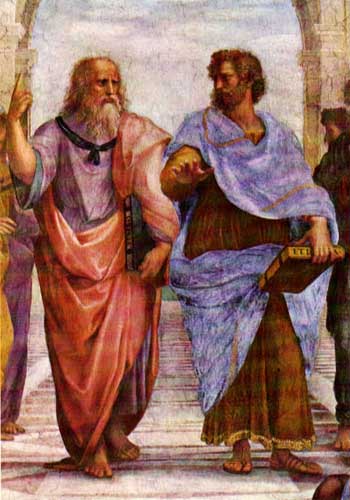
Image credit: http://www.crystalinks.com/plato.jpg

St. Patrick's Day

Chicago dyes this river green each year on March 17.

Happy St. Patrick's Day! 

St. Patrick's Day seems like a random holiday if you think about it... so why do we celebrate it?

A little background. St. Patrick is some Irish guy who lived from around 385-461. (I'm not making this up but Wikipedia might be.) Anyway he became something of a national hero in Ireland I guess—in fact, St. Patrick's Day is a national holiday for them.

How'd it come over to the US (not to mention the rest of the world)? Well, it must be the Roman Catholics from Ireland who immigrated into the US. The first St. Patrick's Day parade was in 1761 in Boston. George Washington even gave his troops a day off on this day in 1780 as an act of solidarity with the Irish in the Irish fight for freedom.

Basically, I guess that the holiday just stuck. I couldn't find out why we're supposed to pinch someone if they don't wear green—probably a tradition some silly schoolchildren started.

A Dissapointing Post Title


Why should I be sad with the title of this post? Look at the title again. Look carefully. Get it? If not, either you don't think that minor spelling errors are that big a deal, or you don't know how to spell DISAPPOINTING. There are TWO P'S and ONE S, not the other way around. I see this word misspelled (yes, misspelled is spelled misspelled) SO MANY TIMES, especially on the internet. I know, it's not really a very big deal, and everyone misspells some words, but whenever I see, for example, an iTunes review and the person writes that they're "dissapointed" with the album, I skip to the next review for someone I can trust. Maybe not always fair. If you start trying to notice it, you'll see people misspelling "disappoint" (that's the right way!) a lot.

Think of it as 2 words if you have to: dis-appoint. (Although I don't think that it has anything to do with un appointing anyone or anything like that.)


Another word I can think of that people commonly misspell is "weird." That's the right way—weird. NOT wierd.

Neither of these is a very big deal, but people might look down on what you write if you make just one error like this! 


If I can think of more common errors I'll add some...

Do You Sound Good Singing To Yourself?

If you sing out loud along with a song, have you noticed that usually your voice sounds good, or at least on key? Maybe this is only true for me but I doubt it. Maybe it's because you're listening to the song, which sounds good and on key, while you're singing. But if you hear a recording of your own voice, singing or not, it always sounds awful! I think I've heard that people hear their own voices in a way that is biologically different from the way other people hear their voices—in other words, if you hate your voice, it's probably just an illusion! Think of it this way: do you actually hate the way that anyone else's voice sounds? OK, maybe for a few people, but it's not really that common.

When lead singers of bands listen to their own songs, do they cringe at their own voice?


Image credit: http://www.sju.edu/studentlife/studentresources/oml/Pictures/music-notes.jpg

Senioritis

When I tried to find an appropriate image for this post, for some reason I found a lot of pictures of kittens with a bottle of beer.

Anyways, on to the topic of this post. Senioritis. Does it exist? Obviously it does. But I think that part of the reason it keeps existing is that people have been hearing about it for years and now think it must apply to them. Why does it have to? The point of being in school is to learn. In the ideal school, you would not have to be tested because the ultimate goal would be learning knowledge, learning how to learn, and learning how to interact socially, and if you really want to learn those things then there's really no reason to be tested. If you really wanted to learn, though, there wouldn't be Senioritis!

That was pretty muddled, but what I guess I'm saying is that you don't have to give in to Senioritis. If you think about it, your second semester in senior year is 1/8th of your whole high school career! Put another way, if you're going to a private school with a tuition of, hypothetically speaking, about $30,000, and you slack off for a semester, that's sort of like $15,000 down the drain!

Ironically I got the idea for this post because I am up past midnight, procrastinating on... sleeping. I'm done with my work but I'm still up, having fun doing random stuff. I think I'll go to bed soon.

Lastly, to sum up and conclude with ending finality, relax and enjoy 2nd semester—go to performances, sports games, hang out with friends, all that—but don't slack off too much! Don't get your college acceptances revoked!


OK well that post was really boring I think. They'll be better in the future I hope. Hey, I'm new to blogging, what do you expect! At least I included an image with this post. Give me a 2nd chance!


Photo credit: http://www.digitaldutch.com/arles/tutorials/thumbnail_tags/galleries/thumbnail_tags_with_size/imgaes/Hammock.jpg.

Monday, March 16, 2009

Blog Inspirations/How I Came Up With This Blog's Name

Hi all. I'm Sean and I'm a senior in high school. I doubt that that introduction was necessary, though, because I doubt that anyone who doesn't know me will be reading this blog.

So, why am I creating a blog? Well first of all, everyone else was doing it so I decided to too, but more specifically Kaytee made me do it. I think that puts her total at 2 (at least) people she's forced to create a blog. Anyways check out her photo blog, it's really polished and professional. The main photo on the top always makes me so hungry!


On to the purposes of this blog. I'm not really sure what I'll write about. I think I'll just write about things that I find interesting. Heck, if you ever have any suggestions, send 'em in! This blog is almost more for personal use, like a journal type thing for fun, and if people actually read it then that's just a bonus. (Don't worry, it won't get too personal.)

That gets me to the title: literally figuratively. I didn't know what else to call it, and I find it funny how often the word "literally" is misused. "This car is literally exploding with paint!" "That test literally killed me!" "They literally traveled to the 4 corners of the earth." (Maybe that last one was just from the Flat Earth Society.)


Anyways, maybe not a great title or anything, but people didn't think Xerox was a great company name and look where it got them!